
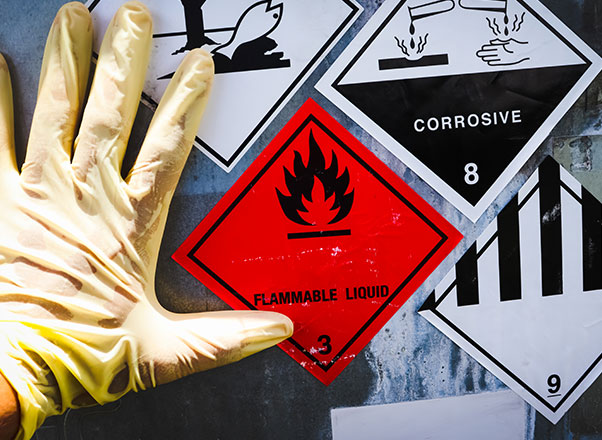
Hazardous substances are chemicals or materials that can cause harm if they’re not used, stored or managed properly.
They’re part of everyday work in many industries, and while they can’t always be removed altogether, they can be managed safely and in line with WHS requirements.
The impact of hazardous substances goes far beyond compliance. It can affect your people’s health, lead to more time off work, reduce productivity and create longer-term challenges for your business.
The real consequences of hazardous substances
Unfortunately, the risks of hazardous substances aren’t just theoretical; they’re playing out in real workplaces across Australia.
Last year alone, there were reports of hundreds of new dust-related lung disease cases recorded in Queensland mines.
Workers at a gas company in Darwin came forward saying they had suffered burns as a result of being exposed to toxic chemicals and oil spills.
And in NSW, 13 Sydney tunnelling workers were diagnosed with the serious respiratory disease silicosis.
Millions of workers regularly breathe in dusts and fumes or get chemicals on their skin, long before anything makes headlines.
Behind every statistic is a person, and often a workplace that didn’t fully understand the risks or didn’t have the right controls in place.
For businesses, the fallout can be significant. Worker health is compromised, teams are disrupted, morale suffers, and reputations can take a hit. That’s why it’s so important to understand the hazardous substances used in your workplace and put the right controls and health protections in place.
So, do you know where your biggest risks are and what you need to do to manage them safely and stay compliant?
High-risk industries for hazardous substances
Some industries work with hazardous substances every day, making the risks more obvious and well recognised. These workplaces typically involve regular exposure to chemicals, dusts, fumes or gases and require strict controls.
Common high-risk workplaces include:
- Mining and quarrying
- Construction and tunnelling
- Manufacturing and processing facilities
- Agriculture and farming
- Automotive and mechanical workshops (incl. welding and fabrication)
- Oil, gas and energy industries
In these environments, hazardous substances are often part of core operations, meaning effective risk assessments, controls and health monitoring are critical.
See also: The essential guide to mining pre-employment medicals
Less obvious (but still real) risk industries
Not all hazardous materials and substance risks are immediately visible. Many workplaces don’t consider themselves ‘high risk’ but still expose workers to substances that can cause harm over time.
Less obvious risk exists in workplaces such as:
- Offices and corporate environments (cleaning chemicals, printer toners, poor indoor air quality)
- Healthcare and aged care settings (disinfectants, medications, sterilising agents)
- Warehousing and logistics (diesel exhaust, fumes, dusts)
- Hospitality and food services (cleaning agents, gases, oils and vapours)
- Schools and childcare centres (cleaning products, art supplies, maintenance chemicals)
In these settings, exposure is often lower-level or intermittent, which can make it easy to underestimate the health and safety risks. Over time, however, repeated exposure can still have a real impact on worker health.
Common health risks from exposure to hazardous substances include respiratory issues (including occupational asthma), skin irritation, burns, organ damage, or long-term occupational diseases like cancer, silicosis and asbestosis.
Hazardous substances regulated under WHS law
In NSW, hazardous substances are regulated under Work Health and Safety (WHS) laws, mainly the Work Health and Safety Regulation 2025. The regulations control substances based on the risks they pose to health and safety.
Hazardous chemicals
These are the most widely regulated and apply to almost every workplace.
Hazardous chemicals include substances that are:
- Toxic or poisonous
- Corrosive substances
- Flammable
- Reactive or explosive
- Harmful if inhaled, swallowed or absorbed through the skin
Examples:
- Cleaning products and disinfectants
- Solvents, fuels and oils
- Paints, adhesives and sealants
- Acids and alkalis
- Gases and vapours
Employer obligations include:
- Maintaining a hazardous chemicals register
- Keeping Material Safety Data Sheets (SDS)
- Risk assessments and control measures
- Worker training and supervision
- Maintain safe storage and handling practices
- Prepare for emergencies
Dangerous goods
Dangerous goods are a subset of hazardous chemicals that present immediate physical risks, such as fire or explosion.
Examples:
- Flammable liquids and gases
- Explosives
- Oxidising agents
These require additional controls around:
- Storage
- Labelling
- Handling and transport
Airborne contaminants (dusts, fumes, vapours and gases)
Some hazardous substances – listed in Schedule 14 of the regulations and by Safe Work Australia – are tightly regulated due to their serious long-term health risks.
These substances include:
- Acrylonitrile
- Arsenic (inorganic)
- Asbestos
- Benzene
- Cadmium
- Chromium (inorganic) – relevant to welders
- Creosote
- Isocyanates – relevant to spray painters and the mining industry
- Lead (inorganic)
- Mercury (inorganic)
- 4,4’-Methylene bis(2-chloroaniline) (MOCA)
- Organophosphate pesticides
- Pentachlorophenol (PCP)
- Polycyclic aromatic hydrocarbons (PAH)
- Crystalline silica
- Thallium
- Vinyl chloride
Employer obligations include:
- Conducting up-to-date risk assessments and maintaining Safety Data Sheets
- Implementing proper controls and regular health monitoring
- Educating staff on safety practices
- Providing workers with their health monitoring reports and notifying the regulator if action is required
- Keeping records for 30 years
Asbestos is a high-risk airborne material with separate WHS Regulation 2025 requirements. As an employer, you need to follow dedicated rules for registers, management plans, licensed removal, training, and health monitoring.
IMPORTANT: Specific contaminant information
From 1 Oct 2025, NSW introduced the Crystalline Silica Worker Register to track high-risk workers and strengthen health monitoring requirements. Annual health checks are now a must for anyone handling materials with more than >1% crystalline silica.
The workplace exposure standard (WES) for welding fumes was cut by 80% in 2024 to help protect workers from cadmium, chromium, and lead exposure. If these chemicals are present in fumes, health monitoring is required.
What does health monitoring involve?
Health monitoring is designed to detect early signs of potential harm from hazardous substances.
As an employer (or PCBU – that’s short for person conducting a business or undertaking), it’s your job to make sure anyone exposed to significant risks gets the right checks and support.
Health monitoring typically includes:
- Recording personal, medical, and occupational history
- Tracking individual exposure levels
- Physical examinations
- Urinalysis and other lab tests, depending on the substance
- Spirometry to assess lung function
- Doctor review and a summary report in line with Safe Work Australia requirements
Even if a hazardous substance can be breathed in, a lung function test – called spirometry – can’t tell the whole story on its own. It won’t diagnose a condition or pinpoint the cause, which is why it’s just one part of a complete health monitoring program.
Respirators are a must for ensuring real protection against hazardous substances. Anyone using a tight-fitting respirator must be fit tested before first use – and every 12 months after that.
See also: Breathe easy: workplace spirometry testing explained
set the maximum amount of airborne contaminants most workers can safely be exposed to. Safe Work Australia sets them to protect health. In NSW, the new term ‘Work Exposure Limit (WEL)’ replaces the WES from 1 December 2026. While the core idea remains the same, the term ‘limit’ is a clearer message that levels must not be exceeded. There are also some individual airborne contaminant limits that have been updated in the new WEL list.
Protect yourself and your workers
Managing hazardous substances isn’t just about compliance. As an employer, you should also be actively reducing risk and keeping your team safe.
Here’s what you should do:
- Assess the risks – Identify which hazardous substances are in your workplace, how employees are exposed, and whether exposure is significant. You may need to bring in an occupational hygienist to help with air monitoring.
- Implement all regulatory requirements – Ensure you have up-to-date risk assessments, Safety Data Sheets (SDS), control measures, and, where required, regular health monitoring in line with WHS Regulation 2025.
- Educate your employees – Make sure your staff know which substances they might be exposed to, the potential long-term health effects, and the safest ways to handle them. Cover things like using personal protective equipment (PPE) correctly and what to do in an emergency.
- Monitor and review – Regularly check controls and health monitoring results, and update procedures if risks or regulations change.
Did you know?
Chemical and noise hazards often go hand in hand, and some substances, such as lead, can damage hearing on their own. The combined exposure means the worker may be at a higher risk of hearing loss. Workers who regularly wear hearing protection must have a hearing test within 3 months of starting, and every 2 years after.
Hazardous substances don’t have to be overwhelming. With the right systems, education and support, you can protect your people and stay compliant – without slowing down your operations.
Get holistic support
Unsure whether your workplace is managing hazardous substances correctly?
Our proactive and industry-leading occupational health Assess → Coach → Monitor program helps you manage hazardous substances safely. We assess potential risks contributing to worker health, complete personalised and compliant health monitoring, and coach your employees on safe practices.
Get in touch with our friendly team today to learn more.