
Workplace specific isocyanate exposure monitoring
As an employer in Australia, you’re legally required to conduct periodic health assessments for workers exposed to isocyanates throughout their careers. Happy Health has provided isocyanates monitoring for over 25 years, using a cost effective and precise method.
What are isocyanates?
Isocyanates are highly reactive chemical compounds widely used in industries such as manufacturing, adhesives, coating, foams, paints, and automotive refinishing. The serve as key building blocks in poly urethane products, but their volatile nature makes them easy to inhale or contact through skin during handling, spraying, or mixing.
Legal Requirements for Health Monitoring
Australian WHS Regulations require employers to provide health monitoring for workers exposed to isocyanates at significant risk levels, like spray painting. Assessment by experienced medical practitioners start with a baseline, then occur at six weeks and every six months during exposure.
Assessment and testing
SafeWork Australia recommends that Biological Monitoring (BM) programs for workers using or exposed to isocyanates include:
- Initial baseline BM upon the commencing employment
- Periodic BM review, 6 weeks of commencement (of isocyanate exposure)
- Regular 6 month BM every six months. If after 12 months, no adverse health issues are reported this should then switch to annual testing.
- Terminal BM performed at the end/termination of the period of isocyanate exposure.
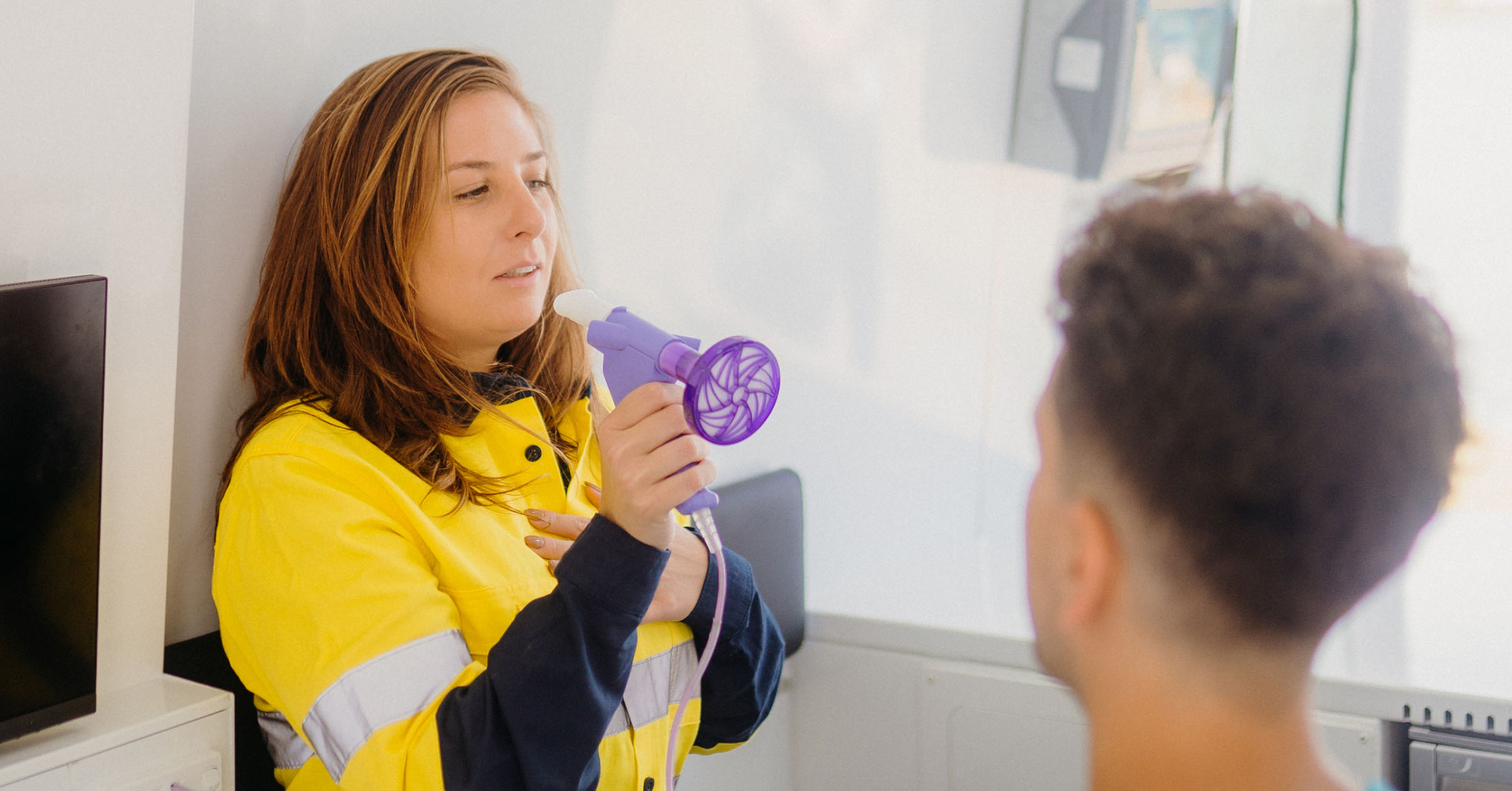
Our isocyanate health monitoring includes a comprehensive medical evaluation by WorkCover accredited doctors which includes:
- Questionnaire on respiratory symptoms and occupation history
- Spirometry (lung function test)
- Physical examination
- Skin check
- Chest X-rays (to detect early signs of asthma sensitisation, or lung damage)
Visit Safe Work Australia to see Exposure Standards.
Frequently asked questions
Here are some of the most common questions we get asked about isocyanates workplace health monitoring.
What is a hazardous substance?
A hazardous substance is any solid, liquid or gas that may be detrimental to a person’s health. These substances are categorised according to whether they have an immediate (acute) or long-term (chronic) impact on health.
What hazardous substances are in the workplace?
Occupational hazardous substances include isocyanates, lead, asbestos, crystalline silica, and 14 other dusts listed as hazardous. Visit the Safe Work website to learn more.
When should health monitoring take place?
Safe Work Australia has established a hazardous substances Code of Practice with recommended time periods for health monitoring and assessment methods as follows:
- Before a worker uses a hazardous substance in a workplace, or as soon as possible after they begin their role
- During the period of exposure while employed
- When a hazardous substance stops being used
What does an isocyanate health assessment involve?
Typically includes a health questionnaire, skin/eye exam, lung function (spirometry) test, and chest X-ray or urine tests.
How often do I need isocyanate monitoring?
Baseline before exposure, then at 6 weeks, every 6 months during exposure; annually if no issues after 12 months.
What are the signs of isocyanate exposure or sensitisation?
Asthma-like symptom (wheezing, shortness of breath), skin irritation, eye/throat issues, or headaches; sensitisation can trigger attacks from low levels.
Who needs isocyanate health monitoring?
Workers exposed above safe levels, like spray painters, foam manufacturers, or those handling coatings and adhesives.
What PPE prevents isocyanate exposure?
Respirators, gloves, and protective clothing, monitoring confirms controls are effective.