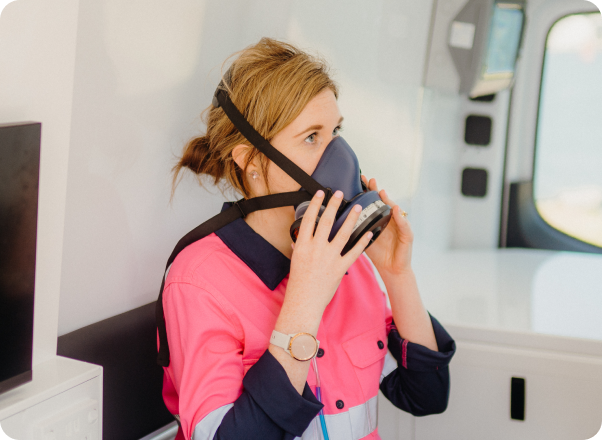
Keep respiratory protection effective and compliant
Ensuring respiratory protection devices achieve a proper fit is essential for safeguarding workers from Airbourne hazardous substances.
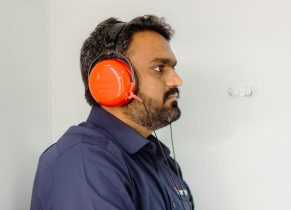
Even when the PPE is certified for the job, certain factors such as incorrect size, comfort, the face or ear shape of the individual user, incorrect use, and inadequate training can mean respiratory masks and earplugs don’t do their job effectively,
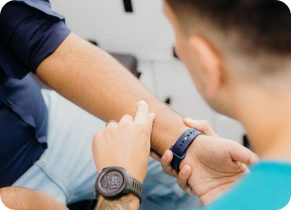
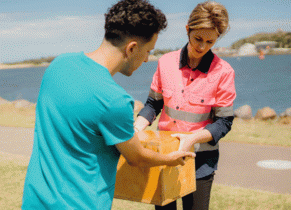
Our health screening vans and visiting health professionals can deliver respirator fit testing and ear fit testing on-site, saving time and hassle. Alternatively, employees can come to one of our clinics.
Benefits of a respirator fit testing
- Ensure PPE protects workers from breathing in harmful dusts, fibres, mists, fumes, vapours, gases, and micro organisms
- Reduce risk of workers developing chronic respiratory illnesses
- Verify that workers are using the proper make, model and size
- Help improve user understanding and compliance
- Lower future workers’ compensation claims
- Meet your legislative requirements
What to expect
Happy Health’s fit testing services verify seal integrity and compliance with Australian WHS standards, minimising exposure risks in high hazard environments like manufacturing and construction.
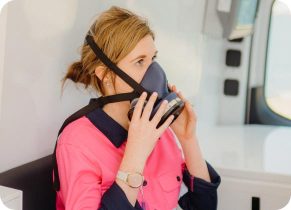
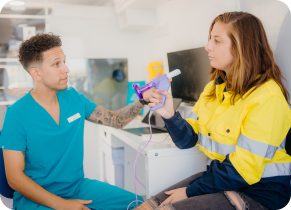
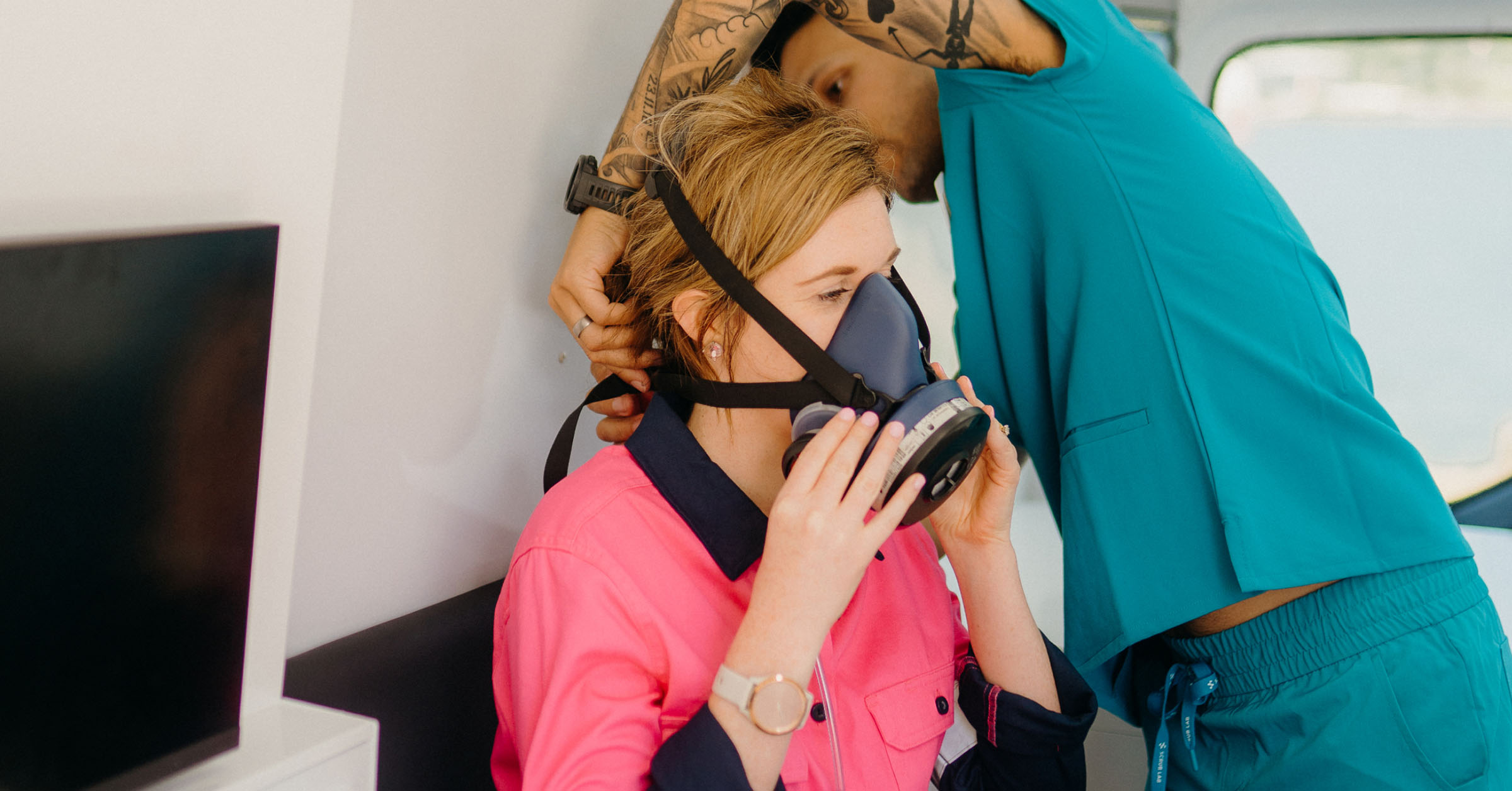
Our highly-trained and experienced staff perform qualitative respirator tests using specialised equipment. As well as carrying out the testing, we also share information on best usage with the worker.
Respirator fit test
Our specialists can test any type of tight-fitting respirator. This is important, as workers must be fit tested with the specific make, model, style, and size (full or half face) of the respirator that they’ll be using.
This respirator will have a probe attached to its face piece, which is connected to a machine by a hose. That machine, known as a Portacount™, then measures the effectiveness of the seal by measuring the amount of leakage into the face piece.
Please note: If workers wear additional PPE or prescription eyewear on the job, they should wear it during this fit test. Earmuffs, hardhats, visors or even heavy clothing can interfere with the way a respirator fits. Workers also need to be clean shaven for their fit test and any respirator use.
Workers must be fit tested before using a respirator in the workplace and then retested at least every 12 months.
Visit Safe Work Australia for information about respiratory protective equipment and regulations.
Frequently asked questions
Here are some of the most common questions we get asked about our respiratory fit testing.
Who is respirator fit testing for?
Anyone who wears a respirator during their normal working day or to perform emergency response activities, should be fit tested to make sure the face piece provides an effective seal. This includes occupations such as quarry workers, coal miners, spray painters, concreters, stone masons, kitchen manufacturers, welders, and those exposed to hazardous substances such as particulate matter and fumes.
Is fit testing mandatory for all workers wearing a respirator?
Harmonised states fall under the Work Health and Safety Act 2011 and the Work Health and Safety Regulation 2011. Neither the Act nor the Regulation states fit testing as a legal requirement. However, the following guidance does:
Codes of Practice
The How to Safely Remove Asbestos Code of Practice 2011 recommends that a fit test is conducted in accordance with AS/NZS 1715:2009, ‘Selection, Use and Maintenance of Respiratory Protective Devices’.
Australian Standards
AS/NZS 1715 specifies that users of any tight-fitting masks are to be fit tested before starting work and then at least once a year.
Manufacturer Specifications
What is respiratory fit testing?
Respiratory fit testing verifies that tight-fitting respirators (like half-face, full-face, or powered air purifying models) create a proper seal on an individuals face to ensure effective protection against airborne hazards.
What types of respiratory fit tests exist?
Qualitative (QLFT, pass/fail taste/smell tests for lower hazards) and quantitative (QNFT, using instruments like CNP or CNC for precise leak measurement) methods, both detailed in Australian standards.
How often should respiratory fit testing occur?
Before first use, with new respirator models, after facial changes (e.g., weight loss/gain), and at least annually or per risk assessment; daily user fit checks are also recommended.
Who performs respiratory fit testing?
A competent, trained person (e.g., accredited under RESP-FIT or occupational hygienist) using approved equipment; Happy Health provides certified on-site or in-clinic services.
Can you have facial hair during testing?
NO… beards, stubble, or hair interfering with the seal prevents a valid test; workers must be clean shaven around the respirator edge.
What if a respirator fails the fit test?
Try different sizes/models until a pass; records must document results, respirator details, and dates.
What’s the difference between respiratory fit testing and fit checking?
Testing is formal, equipment-based validation; checking is a quick user-performed seal test (positive/negative pressure) before each use.
How does Happy Health support compliance of respiratory fit testing?
Happy Health offer qualitative and quantitative fit testing per AS/NZS standards, with records, training, and integration into your respiratory protection program for WHS peace of mind.