
Ongoing assessments ensure early detection of health issues
As employers, you must ensure periodic health assessments for asbestos exposed workers across their careers to meet regulatory standards. Happy Health has provided specialised asbestos monitoring for over ten years, leveraging an innovative, cost-efficient, and precise methodology.
What is asbestos and the health risks for workers?
Asbestos is a group of naturally occurring fibrous minerals once widely used in construction materials, insulation, and fireproofing due to its heat resistance and durability. When disturbed, these tiny fibres become airborne and can be inhaled, embedding deep in the lungs where they cause inflammation and scarring over time.
Key health effects for workers include:
- Asbestosis – Progressive lung fibrosis leading to breathing difficulties
- Lung cancer and mesothelioma – Cancers linked to prolonged exposure, often appearing 20-50 years later
- Pleural diseases – Thickening or plaques around the lungs, reducing capacity
- Increased risk with smoking or high cumulative exposure, even from short-term work
Legal Requirements for Health Monitoring
Under Australia’s Work Health and Safety (WHS) Regulations, employers (PCBUs) must provide and pay for health monitoring for workers at risk of asbestos exposure during licensed asbestos removal work or ongoing asbestos related tasks.
A baseline assessment is required before work begins, and followed by monitoring every two years or as determined by risk and medical advices.
Assessment and testing
Conducted by experienced occupational health practitioners, the baseline and periodic test (typically every 2 years) help identify exposure effect early, ensuring employees remain fit for safe work while providing HR professionals with clear compliance documentation and recommendations for workplace controls.
Happy Health’s asbestos medical assessments for workers include:
- Detailed medical and occupational history questionnaire
- Physical examinations (lungs and respiratory system)
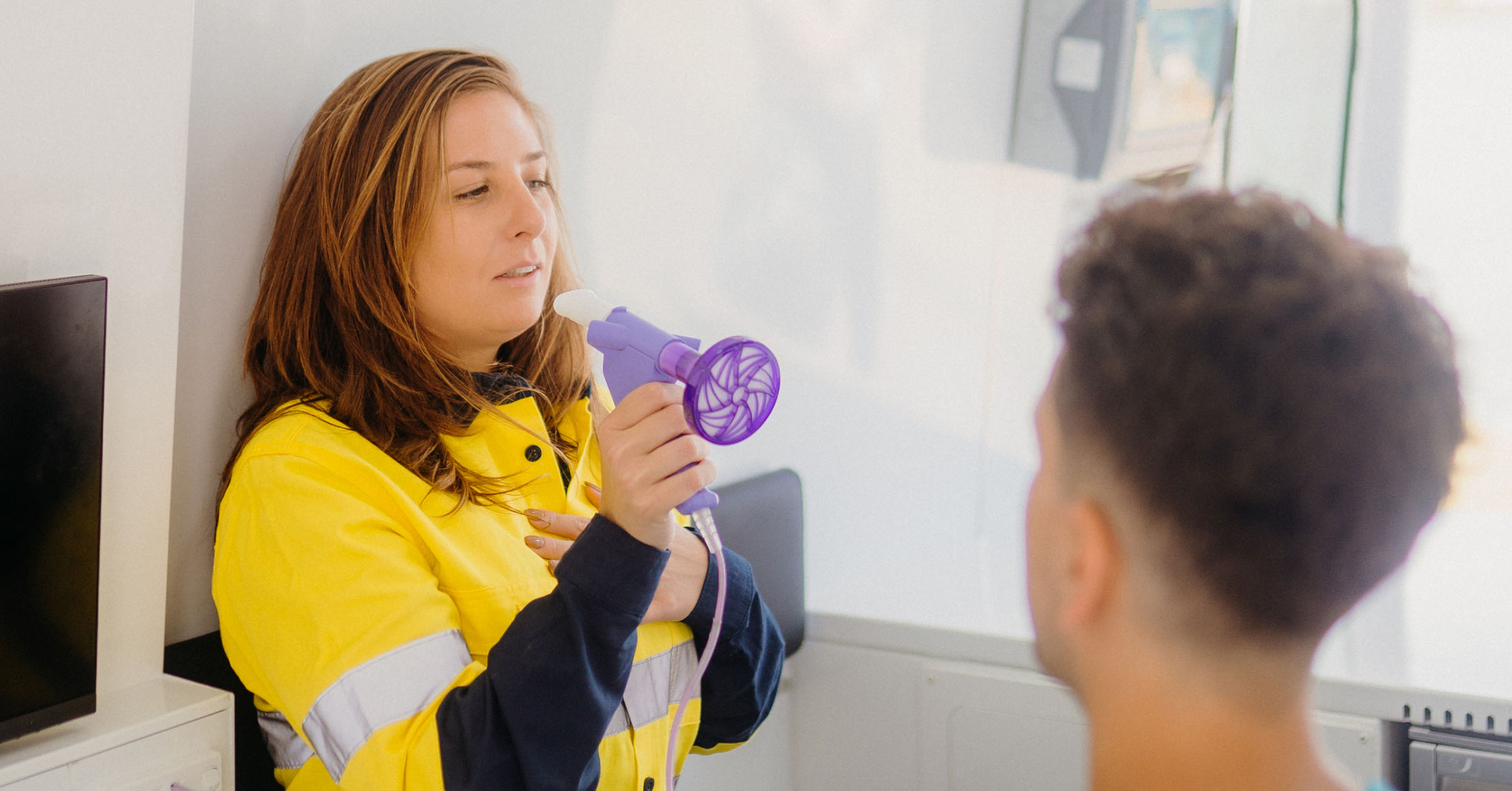
- Spirometry (lung function test)
- Chest X-ray
Visit Safe Work Australia to see Exposure Standards.
Frequently asked questions
Here are some of the most common questions we get asked about asbestos workplace health monitoring.
What is a hazardous substance?
A hazardous substance is any solid, liquid or gas that may be detrimental to a person’s health. These substances are categorised according to whether they have an immediate (acute) or long-term (chronic) impact on health.
What hazardous substances are in the workplace?
Occupational hazardous substances include isocyanates, lead, asbestos, crystalline silica, and 14 other dusts listed as hazardous. Visit the Safe Work website to learn more.
When should health monitoring take place?
Safe Work Australia has established a hazardous substances Code of Practice with recommended time periods for health monitoring and assessment methods as follows:
- Before a worker uses a hazardous substance in a workplace, or as soon as possible after they begin their role
- During the period of exposure while employed
- When a hazardous substance stops being used
What does an asbestos medical assessment involve?
Demographic/medical/occupational history, physical exam (focus on respiratory system), spirometry (lung function test), and chest X-ray if indicated.
How often are asbestos health monitoring tests required?
Baseline before work starts, then every two years during exposure; frequency based on risk assessment.
Who needs an asbestos medical?
Workers doing licensed asbestos removal or at risk during asbestos-related tasks.
Is asbestos health monitoring mandatory in Australia?
Yes, under WHS Regulations for at-risk worker; employers must provide and pay for it.
What if results show abnormalities?
Medical practitioner recommends further tests or removal from exposure; employer review controls.
Does asbestos exposure show up immediately in tests?
No, diseases like mesothelioma have 20-50 year latency; monitoring detects early changes.