
Workplace specific silica health surveillance
As an employer, you’re legally required to periodically monitor the health of workers exposed to crystalline silica throughout their careers. Happy Health delivers tailored silica health monitoring, featuring cost-effective, and precise approach, conducted by WorkCover accredited doctors and occupational health specialists.
What is Crystalline Silica?
Crystalline silica is a natural mineral found in rocks, sand, and soil, with quartz (CAS 14808-60-7) as its most prevalent form. It’s present in materials like concrete, mortar, aggregates, and engineered stone products, some of which contain up to 97% silica.
Higher silica content increase the risk of workers inhaling fine dust, leading to serious health conditions such as silicosis.
SafeWork Australia’s Monitoring Guide for Crystalline Silica link exposure, especially from composite stone work, to rising case of silicosis and progressive massive fibrosis among workers.
Legal Requirements for Health Monitoring
Under Schedule 14 of the Work Health and Safety Regulations (NSW, 2017), employees exposed to crystalline silica must receive health monitoring. These assessments must be carried out by or supervised by a registered medical practitioner experience in health monitoring.
Note: Any workplace handling silica based products should implement a crystalline silica health monitoring program.
Assessment and testing
According to SafeWork Australia’s ‘Hazardous Chemicals Requiring Health monitoring’, our crystalline silica health assessments cover these key evaluation components:
- Pre-employment or initial baseline assessment
- Demographic, medical and occupational history
- Record of personal exposure
- Standardised respiratory questionnaire
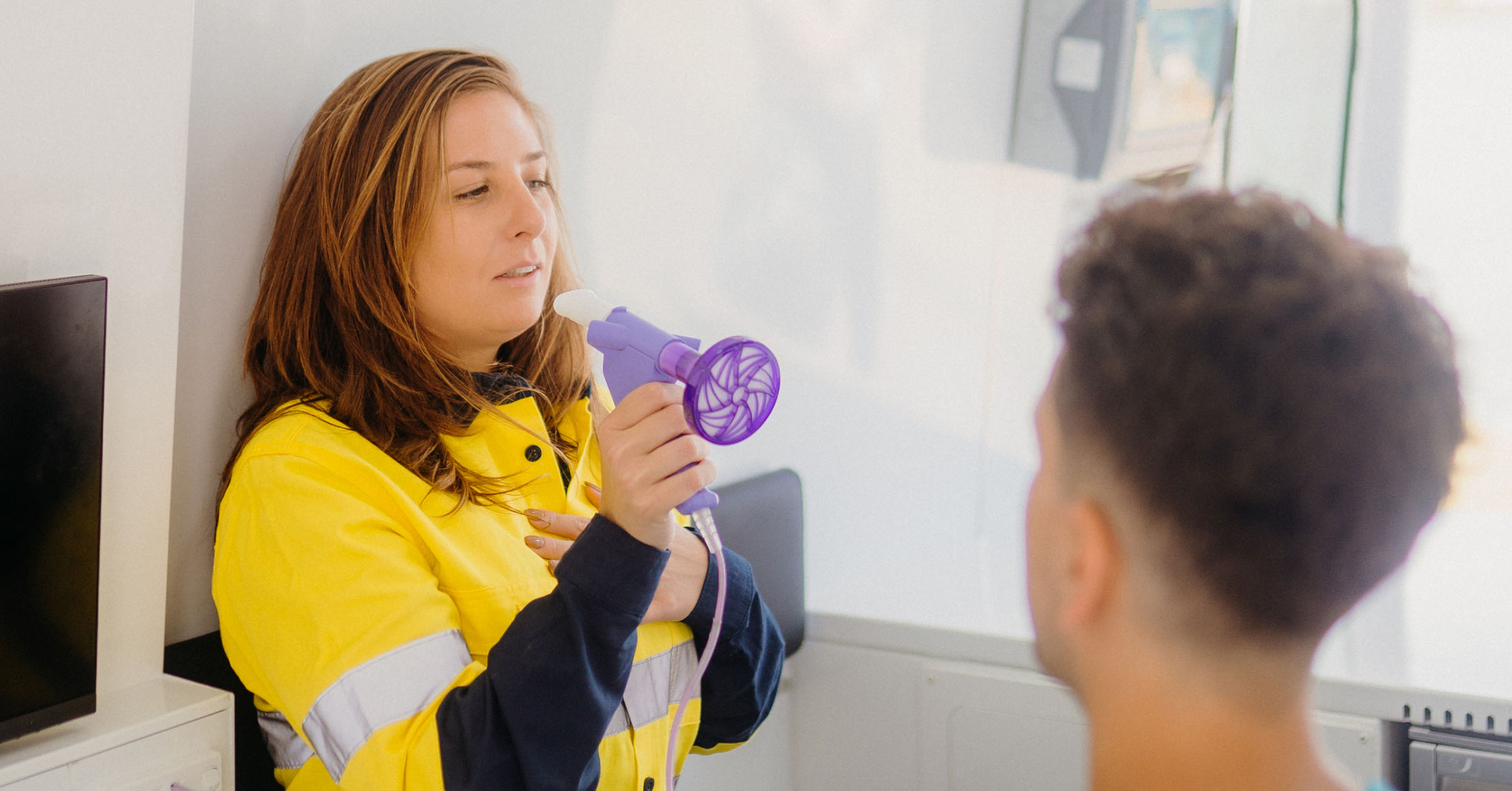
- Annual spirometry (lung function test )
- Chest X-ray (baseline and high risk workers)
Frequently asked questions
Here are some of the most common questions we get asked about hazardous substance workplace health monitoring.
What is a hazardous substance?
A hazardous substance is any solid, liquid or gas that may be detrimental to a person’s health. These substances are categorised according to whether they have an immediate (acute) or long-term (chronic) impact on health.
What hazardous substances are in the workplace?
Occupational hazardous substances include isocyanates, lead, asbestos, crystalline silica, and 14 other dusts listed as hazardous. Visit the Safe Work website to learn more.
When should health monitoring take place?
Safe Work Australia has established a hazardous substances Code of Practice with recommended time periods for health monitoring and assessment methods as follows:
- Before a worker uses a hazardous substance in a workplace, or as soon as possible after they begin their role
- During the period of exposure while employed
- When a hazardous substance stops being used
What are the recommended levels of exposure to crystalline silica?
The recommended levels of exposure to crystalline silica may vary between state to state, so it is advisable to check with your local governing body.
According to SafeWork Australia, the workplace exposure standard for respirable crystalline silica (silica dust) that must not be exceeded is 0.05 mg/m3 (eight hour time weighted average).
What diseases can silica dust cause?
Exposure to silica dust may lead to a variety of different diseases, including silicosis.
Silicosis is a form of occupational lung disease caused by inhaling crystalline silica dust. It is marked by inflammation and scarring of the lungs.
Other disease that could develop after exposure to silica dust include:
- Chronic bronchitis
- Chronic obstructive pulmonary disease
- Emphysema
- Lung cancer
- Kidney disease
- Scleroderma (a connective tissue disease)
What activities have a high exposure to crystalline silica dust?
Examples of work activities and occupations that have a high exposure to crystalline silica dust include:
- Working with composite stone countertops
- Excavation, earth moving and plant operations
- Paving and surfacing
- Mining and mineral ore processing
- Tunnelling
- A variety of construction, labour and demolition jobs
- Stone/brick cutting
- Abrasive blasting