Healthy lungs are at the heart of a safe and productive workplace. When lung function is reduced, your employees may tire more quickly, struggle to focus or face a higher risk of accidents.
Jobs in high-risk environments—like mining, construction, manufacturing, or roles with dust, fumes, smoke or other airborne hazards—can quietly take a toll on lung health over time.
Because of this, regular spirometry testing is a must. For workplaces with higher exposure risks, it’s also a legal requirement under workplace health and safety regulations, helping you spot early issues and keep your team healthy and protected.
What is spirometry testing?
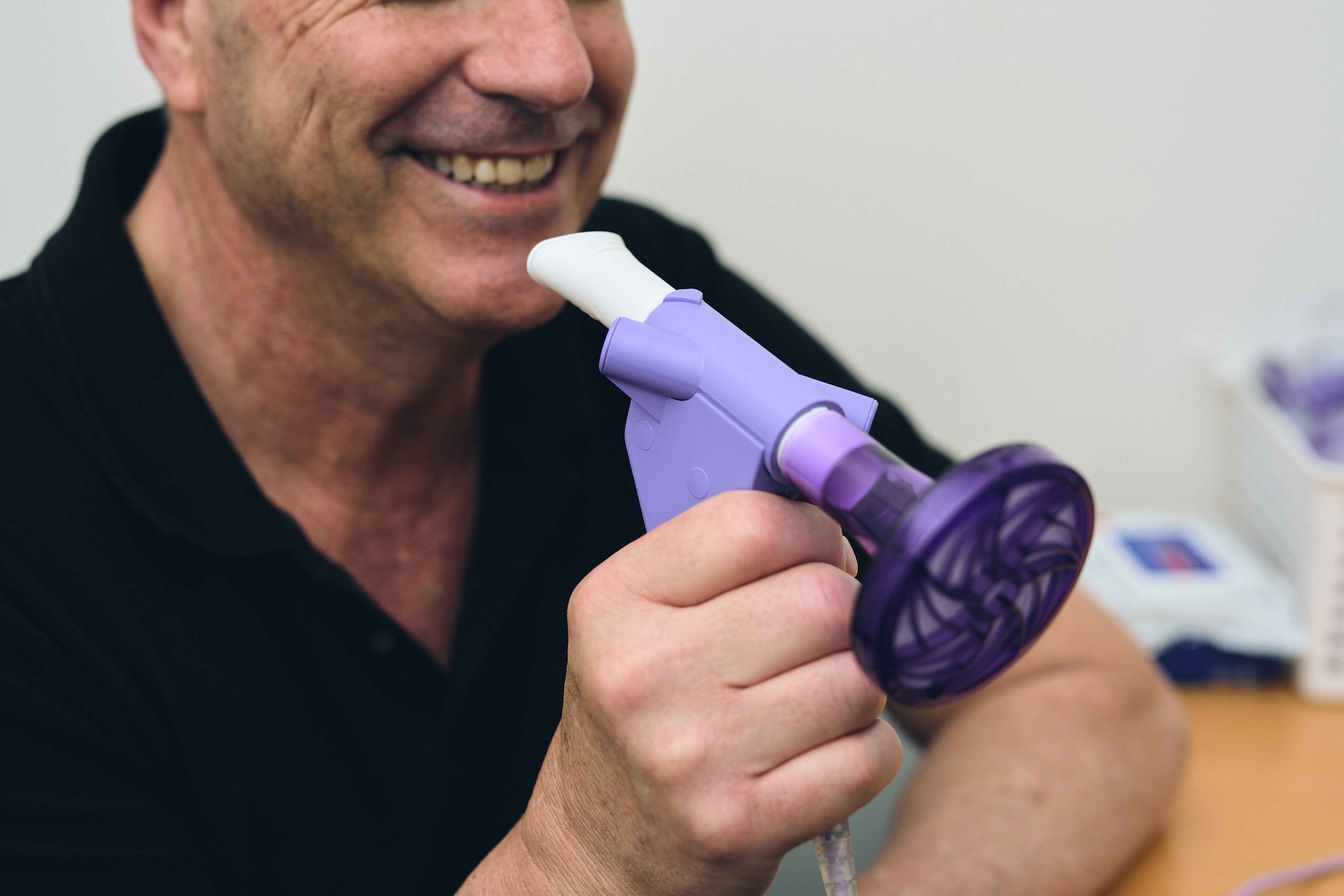
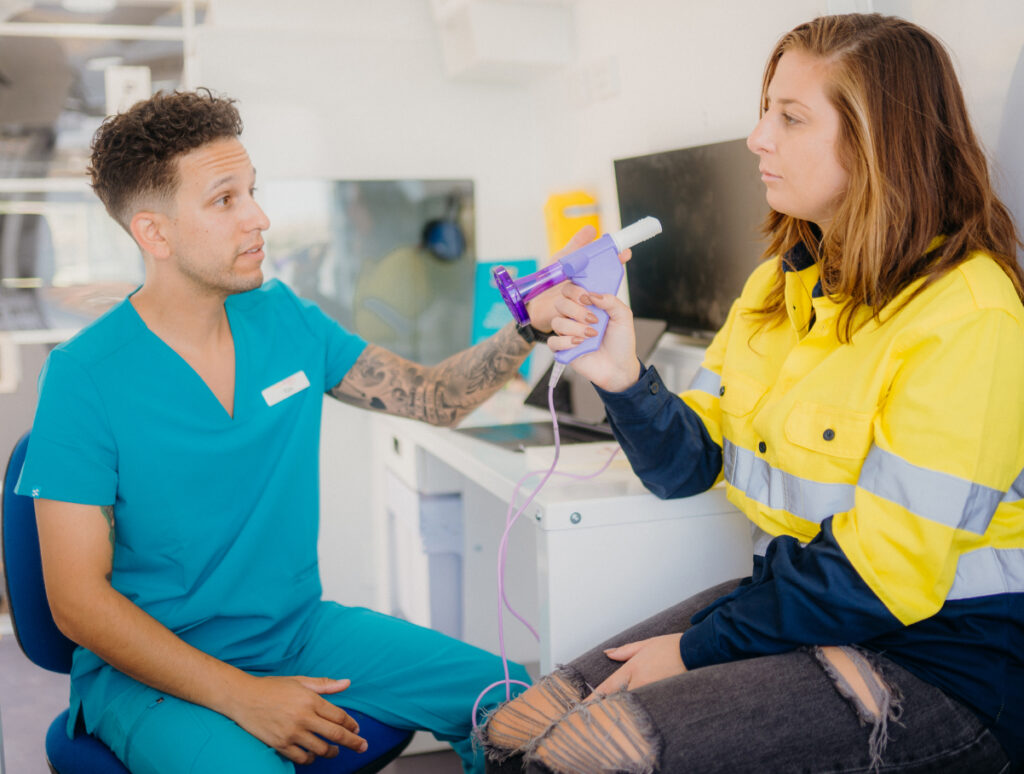
Spirometry testing—or lung function testing—is a simple, non-invasive test used to test how well a person’s lungs are working. It measures three things:
- How much air you breathe in – This shows how well your lungs can fill.
- How much air you breathe out (FVC) – Forced vital capacity – the total amount of air you can forcefully blow out after taking a deep breath.
- How quickly you can breathe out (FEV₁) – Forced expiratory volume in one second – how much air you can blow out in the first second of that breath.
These numbers help a medical professional understand how well the lungs are working and whether there might be any obstruction or restriction to airflow impacting respiratory health.
Spirometry is safe to do for almost everyone. But it does require some effort and can be challenging—particularly if you haven’t done it before.
Why is spirometry testing done?
Spirometry is usually done if someone has symptoms like cough, wheeze or shortness of breath, or has a lung condition or respiratory disease—such as asthma, chronic obstructive pulmonary disease (COPD) or other serious lung health concerns—including monitoring for potential lung cancer risks.
In workplaces where people may be exposed to dust, fumes, smoke or other airborne hazards, occupational health spirometry is used as part of baseline and routine health monitoring programs and checks.
Regular spirometry testing can help monitor the effects of respiratory hazards by:
- Spotting problems before they cause symptoms
- Tracking any changes in lung function over time[KB1]
- Keeping lungs healthy, free from occupational lung disease and helping people stay safe at work
The main focus in these tests is detecting abnormalities and dust-related lung conditions, like pneumoconiosis, as early as possible.
At Happy Health, we take a 3-step evidence-based approach—assess, coach, monitor—to help protect your team’s lung health, catch early signs of issues, and ensure ongoing workplace safety through regular spirometry testing.
What workplaces need spirometry testing?
Here in Australia, spirometry testing is required in your workplace if employees are exposed to airborne contaminants that may affect lung health.
Spirometry is particularly important in industries where workers may be exposed to harmful airborne substances. These include:
- Mining and quarrying – Exposure to coal dust and silica
- Construction and demolition – Handling materials that may contain asbestos
- Manufacturing and metalworking – Exposure to welding fumes and chemical dusts
- Agriculture and farming – Exposure to grain dust and pesticides
- Woodworking and carpentry – Exposure to wood dust
- Fire and emergency services – Exposure to smoke and chemical fumes
- Chemical plants or laboratories – Exposure to chemical vapours and gases
- Textile and garment industries – Exposure to cotton and synthetic fibre dust
- Baking and food processing – Exposure to flour and grain dust
- Healthcare – Exposure to powdered medications and disinfectants
- Printing and painting industries – Exposure to ink, solvents and aerosol sprays
- Rail and transport – Exposure to diesel fumes and other airborne particles
See also: The essential guide to mining pre-employment medicals
What are my legal responsibilities as an employer?
Under the Work Health and Safety (WHS) Act and Regulations, employers are required to manage risks from airborne contaminants as far as is ‘reasonably practical’. In simple terms, this means taking steps to protect your team.
Your specific responsibilities include:
- Ensuring that workers aren’t exposed to airborne contaminants above the Workplace Exposure Standards (WES) until 30 November 2026. After this date, the new Workplace Exposure Limits (WEL) will apply.
- Conducting air monitoring to determine if the WES/WEL has been exceeded.
- Recording and keeping air monitoring results for 30 years.
- Ensuring that air monitoring results are readily accessible to workers.
By meeting these requirements, you can help protect your workers’ lung health, comply with legal obligations and demonstrate a commitment to health and safety in your workplace.
What are the WES?
The WES is the maximum allowed concentration of an airborne contaminant in the workplace air, averaged over an 8-hour workday.
The WES is expressed in units of micrograms per cubic metre (µg/m³) or milligrams per cubic metre (mg/m³), depending on the substance.
For example, the WES for respirable crystalline silicais0.05 mg/m³, and for coal dust, it is 1.5 mg/m³. These values represent the maximum average concentration of these substances that workers can be exposed to over an 8-hour workday without significant risk to health.
Importantly, these exposure standards are set to protect most workers, but everyone’s lungs are different. Some people may still be affected at levels below the WES, so as an employer, you should always try to keep exposure as low as possible.
What will change when WEL is introduced?
When the workplace exposure limit is introduced starting on 1 December 2026, the main changes will be:
Updated values – Some exposure limits may change based on the latest scientific evidence.
Legally enforceable – WELs are stricter limits that employers must not exceed, rather than just guidelines.
Focus on risk management – WELs emphasise reducing exposure as much as reasonably practical, not just staying under a number.
How are the results of spirometry assessed?
Spirometry results are usually compared to predicted values based on your age, sex, height, and ethnicity. Common measures include:
- FVC (forced vital capacity): Usually ≥ 80% of predicted is considered normal.
- FEV₁ (forced expiratory volume in 1 second): Usually ≥ 80% of predicted is normal.
- FEV₁/FVC ratio: Normally ≥ 0.7 (or 70%) in adults – this shows how much air you can blow out in the first second compared to the total.
Interpreting the results
- Values within normal range – Lungs are likely healthy.
- Lower FEV₁/FVC ratio – Possible obstruction (e.g., asthma, COPD).
- Lower FVC with normal ratio – Possible restriction (lungs can’t fill fully).
Workplace health providers will explain whether results are within the normal range and if any follow-up, treatment, or monitoring is needed to keep lungs healthy on the job.
Follow-up, treatment or monitoring might include:
Review and clearance by a lung specialist
Further information collected or additional testing and scans
Increased frequency of monitoring
Here at Happy Health, we use a green, amber or red status to help easily represent whether lung health is safe or at risk.
The importance of pre-test instructions
To ensure a spirometry test is as accurate as possible, it’s important that workers pay attention to any instructions given beforehand, such as:
- Pause certain inhaler medications for a set period of time (if safe to do so— follow your doctor’s advice).
- Avoid smoking for several hours before your appointment.
- Skip heavy meals just before the test, as a full stomach can affect your breathing.
- Avoid vigorous exercise for at least 30 minutes beforehand.
- Wear loose, comfortable clothing so you can breathe easily.
It’s also important they answer any questions about their health, recent illnesses or medications as accurately and honestly as possible. This helps ensure the test is done safely and gives reliable results.
Get started with spirometry testing
At Happy Health, we make workplace spirometry testing easy and thorough. We start with a baseline test for new employees to understand their lung health, then provide regular monitoring, usually annually, to track any changes over time.
All testing is done by caring, accredited medical providers. If results show potential lung issues, we help you take proactive action. Plus, we maintain accurate records of all tests and follow-ups, so you can focus on keeping your team safe, happy and healthy.
Get in touch with our friendly team today to discuss your workplace spirometry needs and book in your employees’ lung health appointments. You can come to one of our local clinics, or we can come to you in one of our Happy Health vans!
See also: Workplace audiometric testing Q&A: a guide for employers