Identify hearing loss or associated conditions early
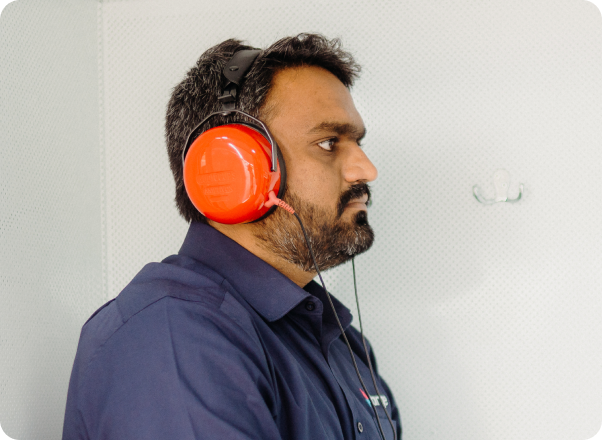
A hearing assessment can help identify pre-existing hearing loss and whether it may impact an employee’s ability to do the role safely. It also gives employers a baseline for ongoing monitoring, helping track changes in hearing thresholds over time.
Happy Health can also support employers with a pre-employment hearing test or pre-employment audiometric test where hearing ability is relevant to a role. This helps employers make appropriate decisions before a worker starts and supports safer placement across high-risk environments.
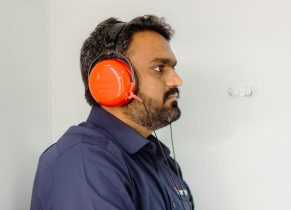
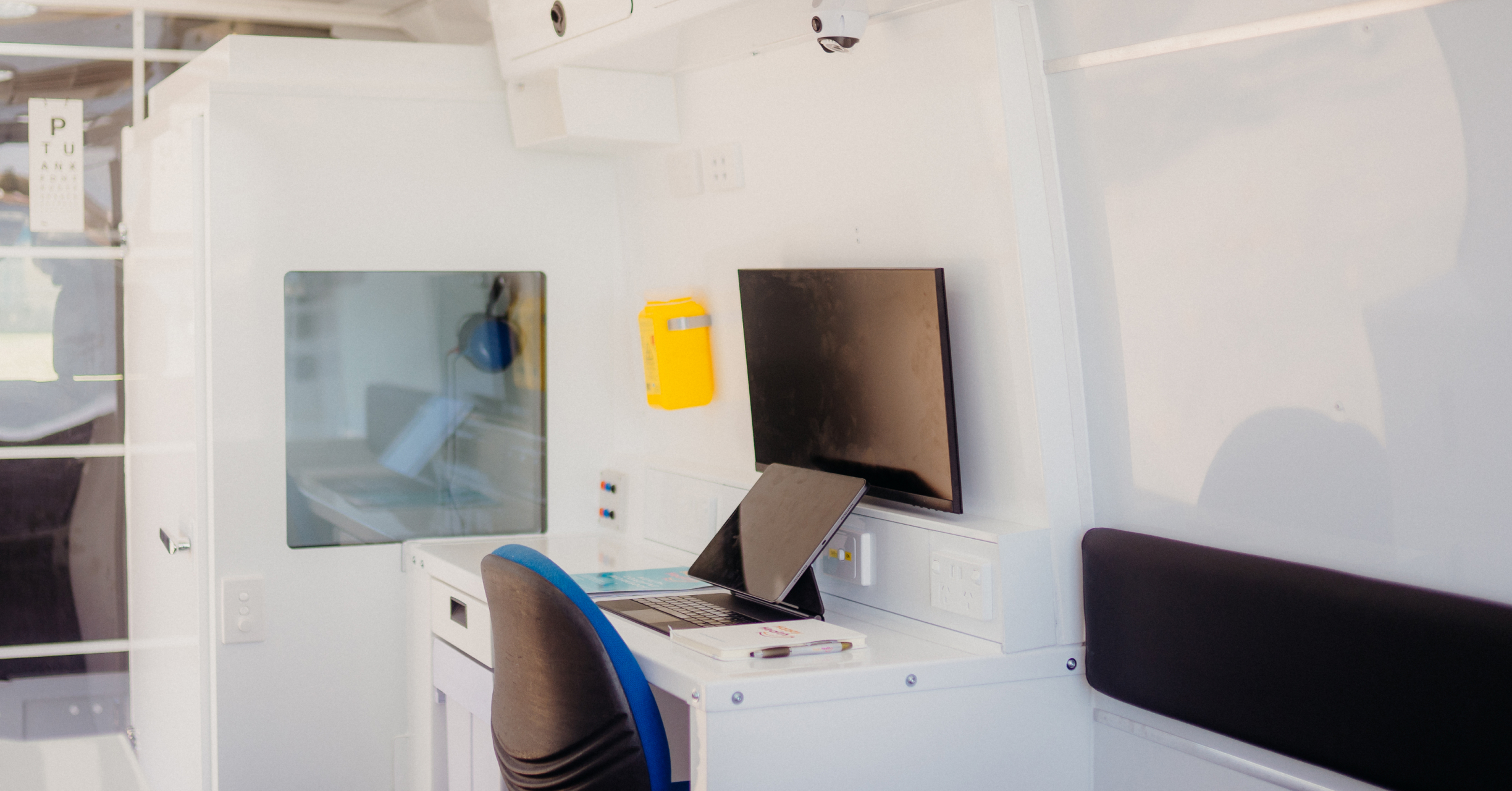
All of our workplace hearing tests are performed by qualified doctors, nurses and health professionals. Our health screening vans and visiting health professionals can perform on-site hearing tests, saving time and hassle – or your employees can come to one of our clinics. Contact us to learn more.
Benefits of workplace hearing tests
- Support the early detection of hearing loss and associated conditions
- Help identify workers who may need a follow-up test
- Reduce workplace injuries and accidents linked to reduced hearing awareness
- Support compliance with work health and safety duties and relevant safety laws
- Help employers understand hearing ability across their workforce
- Minimise presenteeism and absenteeism
- Boost engagement and productivity
- Support lower workers’ compensation claims
- Help inform noise control measures and safer work practices
- Meet your legislative requirements
Types of hearing tests
We offer two types of hearing assessments for your employees:
Baseline tests
A reference hearing test is conducted after the employee has avoided high-level noise exposure for at least 16 hours, ensuring the ear is not fatigued. It serves as a baseline for future monitoring.
A baseline test can be helpful for workers exposed to hazardous noise, labour hire workers, or employees who work across multiple host employers. It gives employers clearer information about a worker’s hearing before ongoing exposure occurs.
Monitoring tests
Monitoring testing detects any significant changes in hearing, such as noise-induced hearing loss, without requiring quiet time before the test. It highlights any issues with the use of hearing protection and can help identify whether current controls are working.
Monitoring tests can also help detect a threshold shift, including a permanent threshold shift, before hearing loss becomes more severe. This supports earlier intervention and better long-term outcomes for workers.
Hearing loss criteria
We triage workers who show a shift in average threshold of:
- 3000, 4000 & 6000Hz greater than or equal to 5Db
- Greater than or equal to 10dB at 3000 & 4000Hz
- Greater than or equal to 15dB at 6000Hz
- Greater than or equal to 15dB at 500, 1000, 1500 or 2000Hz
- Greater than or equal to 20dB at 8000Hz
Frequently asked questions
Here are some of the most common questions we get asked about workplace hearing tests.
Who should have regular hearing tests?
Any worker can benefit from regular audiometric testing, especially if they work in an environment where hazardous noise may be present. In addition, anyone who regularly uses hearing protection at work should be tested.
Hearing loss and associated conditions, such as tinnitus, can affect a person’s ability to perform in many roles. In some industries, audiometric testing is also linked to work health and safety duties when workers need to wear hearing protection because noise exceeds the relevant exposure standard.
How long does an employee workplace hearing test take?
Testing is quick and easy, and usually takes about 20 minutes per employee.
Happy Health’s mobile testing units can complete onsite hearing tests at your workplace to reduce travel time and create minimal downtime for your team.
When do I receive hearing test results?
We send initial results straight away. A more detailed, quality-assured employee health report is then usually delivered in just two working days.
Alternatively, we offer a 24-hour fast-tracked service. These audiometric testing results can help employers understand whether further action, a follow-up test or review may be needed.
Does Happy Health provide hearing tests at work?
Yes. Happy Health can provide hearing tests at your workplace or in one of our clinics.
What is audiometric testing?
Audiometric testing is an auditory assessment that checks how well a person can hear sound across different frequencies.
During the test, the worker responds to tones at different pitches and volumes. This helps identify the softest sound the person can hear and whether their hearing has changed since a previous test.
What are audiometric testing services used for?
Audiometric testing services help employers monitor hearing ability, identify early signs of hearing loss and support safer workplace noise management.
They can be used as part of a pre-employment medical, ongoing health surveillance or workplace hearing conservation program.
What are audiometric testing requirements?
Audiometric testing requirements apply when employers need to monitor workers who are regularly exposed to hazardous noise or who frequently use personal hearing protection because workplace noise exceeds the noise exposure standard.
Safe Work Australia states that employers must provide audiometric testing to workers who frequently use hearing protection to protect them from noise above the noise exposure standard.
When and why do employers need to provide audiometric testing?
Employers may need to provide audiometric testing when workers frequently use personal hearing protection because workplace noise exceeds the exposure standard.
Testing helps employers meet their work health and safety duties, track changes in a worker’s hearing over time and reduce the risk of permanent hearing damage. It also helps employers assess whether current noise control measures, PPE and worker health protections are working effectively.
What is the noise exposure standard?
The noise exposure standard sets the level of workplace noise exposure that should not be exceeded.
If workers are exposed to noise above this standard, employers should assess the risk and implement controls to reduce noise exposure. This may include engineering controls, safer work methods, hearing protection and regular testing.
What happens if noise exceeds the exposure standard?
If noise exceeds the exposure standard, employers need to manage the risk under relevant work health and safety duties.
This may involve a noise assessment, reducing noise at the source, introducing noise control measures, training workers and ensuring workers have suitable hearing protection.
What is a noise assessment?
A noise assessment measures workplace noise levels and identifies whether workers are exposed to hazardous noise.
A competent person can conduct a noise assessment to help employers understand the risk and decide which controls are needed.
Does Happy Health provide occupational noise assessments?
Happy Health provides workplace hearing tests and audiometric testing. For occupational noise assessments, employers may need a competent person, such as an occupational hygienist, to measure and assess workplace noise levels.
Happy Health’s hearing testing can support your broader noise management program by monitoring worker hearing over time.
Why is occupational noise management important?
Occupational noise management helps protect workers from hearing damage linked to loud machinery, tools, vehicles or other varied noise sources.
A strong program may include noise assessment, effective control measures, worker training, audiometric testing and personal protective equipment where needed.
How can employers create more effective control measures for workplace noise?
Effective control measures for workplace noise may include reducing noise at the source, isolating noisy equipment, maintaining machinery, changing work processes and limiting time spent in noisy areas.
A noise assessment can help employers identify the source of the risk, measure exposure and decide whether engineering controls, administrative changes, hearing protection or a mix of controls is needed.
Hearing protection can be used when higher-level controls do not reduce the risk enough. However, it is usually more effective to reduce noise exposure first, rather than relying only on PPE.
Is hearing protection considered personal protective equipment?
Yes. Hearing protection is a type of personal protective equipment.
Employers may need to provide hearing protection when workers are exposed to hazardous noise that cannot be controlled by other methods. Workers may also need training on how to fit, wear and maintain it correctly.
What is personal hearing protection?
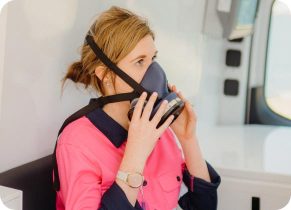
Personal hearing protection includes devices such as earplugs or earmuffs that reduce the amount of noise entering the ear.
These devices must be suitable for the worker, the task and the noise level. They should also fit properly around the ear canal to provide effective protection.
Can long-term noise exposure cause permanent hearing loss?
Yes. Long-term noise exposure can cause permanent hearing loss, especially when workers are exposed to hazardous noise without effective controls.
Hearing loss can also occur suddenly after a very loud noise event, such as an explosion or impact noise.
What is bone conduction testing?
Bone conduction testing is a type of hearing test that sends sound vibrations through the bones of the skull to the inner ear.
It may be used by hearing specialists to help understand the type or cause of hearing loss. Happy Health’s workplace audiometry focuses on workplace hearing tests and screening, with referral pathways where further review is needed.
Why is early detection important?
Early detection gives employers and workers a chance to act before hearing changes become more serious.
If testing shows a threshold shift, employers can review hearing protection, training, noise exposure and control measures to reduce further risk.
Can hearing loss affect health and safety at work?
Yes. Reduced hearing ability can affect health and safety, especially in roles where workers need to hear alarms, instructions, vehicles or other warning sounds.
Regular testing helps employers identify concerns early and support safer work practices.
What should employers do if a threshold shift is found?
If a threshold shift is found, the worker may need a follow-up test, further review or referral to an appropriate hearing professional.
Employers should also review the worker’s noise exposure, hearing protection use and existing noise control measures.
Can only workers exposed to hazardous noise need testing?
In most workplace compliance contexts, only workers who are frequently exposed to hazardous noise or who must use hearing protection because noise exceeds the exposure standard may need regular audiometric testing.
However, other employees may still benefit from testing if hearing ability is important to their role or if there are concerns about hearing changes.
Do labour hire workers need hearing tests?
Labour hire workers may need hearing tests if they work in environments where hazardous noise is present.
Employers and host employers should work together to manage risks, especially when workers move between multiple host employers with different noise exposures.
How do hearing tests support workers' compensation claims?
Hearing test records can help provide useful information if workers’ compensation claims arise in relation to workplace hearing loss.
Baseline and monitoring results can show whether hearing has changed over time and help employers respond with better evidence.
Why choose Happy Health for workplace hearing testing?
Happy Health is a leading provider of workplace health services, with mobile health vans, in-clinic options and qualified health professionals who understand workplace needs.
We make testing practical, efficient and easy to arrange, so your business can protect worker hearing while keeping operations moving.