
Ongoing Health Monitoring helps keep workers safe
As an employer, you’re required to carry out periodic health assessments for welders throughout their careers. Happy Health have been delivering health monitoring services for over 25 years with a proven approach that’s innovative, cost-effective, and accurate.
Why do welders need health monitoring?
Welders in Australia may be exposed to welding fumes that contain hazardous particles and gases, which can affect respiratory health short term and over time. Other health issues can include irritation of the eyes, nose throat and lungs, metal fume fever, asthma, reduced lung function, and in some cases serious lung disease and cancer.
Monitoring helps pick up early changes before symptoms become more severe, especially for workers who regularly weld stainless steel or other metals that produce hazardous fumes.
Legal Requirements for Health Monitoring
Under Australian Work Health and Safety (WHS) Regulations, employers (PCBUs) must provide health monitoring for welder when there’s a significant risk of health effects from welding fume exposure, particularly if relying on controls like RPE or administrative measures to stay below the workplace exposure standard (WES) of 1mg/m³.
In NSW, additional requirements may apply under Schedule 14 for specific substances like chromium or cadmium in fumes, ensuring compliance supports both worker safety and regulatory obligations.
Assessment and testing
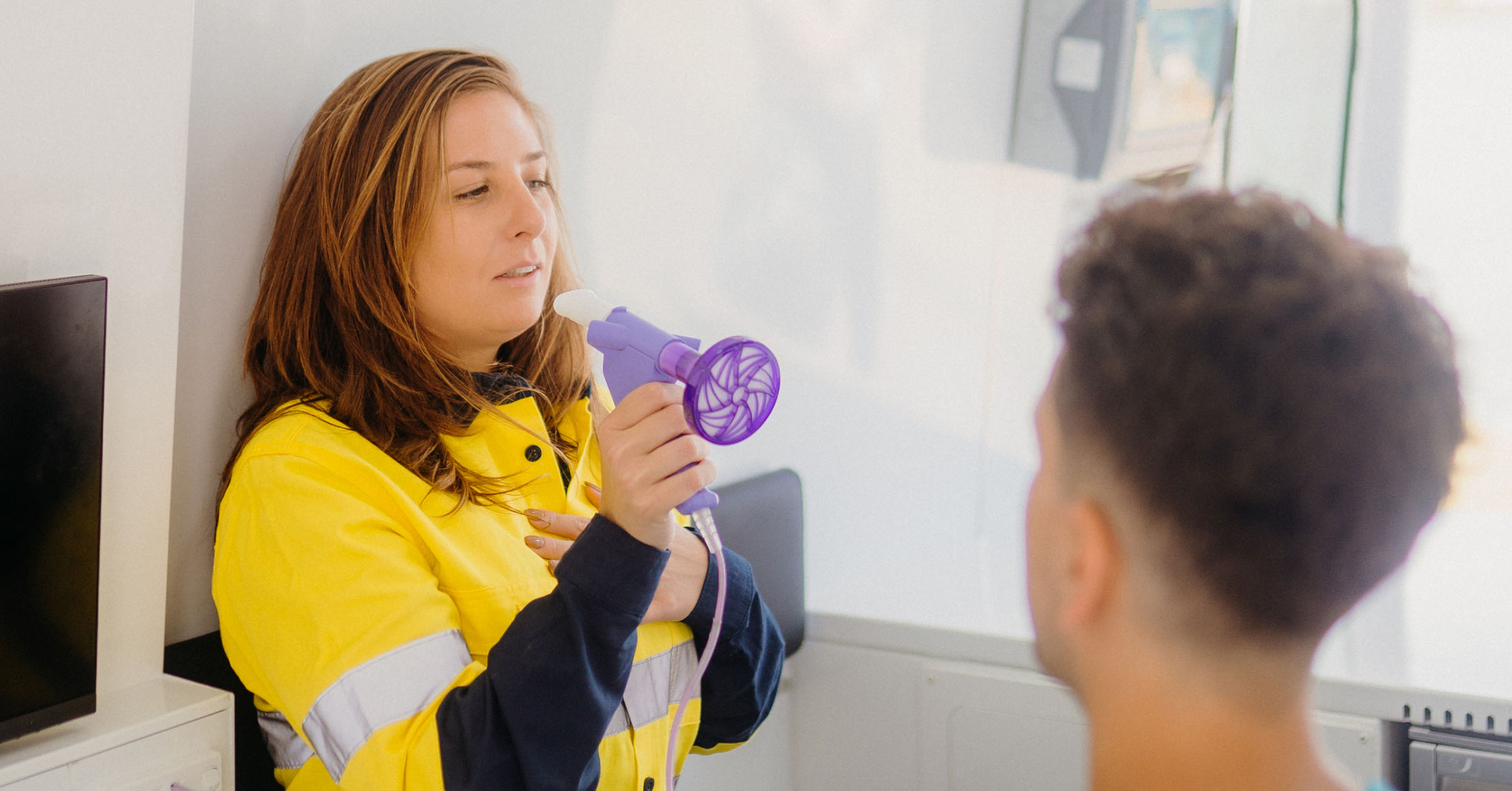
Happy Health’s welders’ medical assessments are conducted by our experienced occupational health specialists. Baseline results are captured before exposure and ongoing monitoring to catch issues early, ensuring welders remain fit for safe and effective work.
Welder’s medical includes:
- Respiratory symptoms questionnaire
- Welding history
- Spirometry (lung function test)
- Physical examinations of the lungs, skin, and eyes
- Blood or urine test (to detect heavy metal exposure from fumes)
- Chest x-ray
Visit Safe Work Australia to see Exposure Standards.
Frequently asked questions
Here are some of the most common questions we get asked about welders workplace health monitoring.
What is a hazardous substance?
A hazardous substance is any solid, liquid or gas that may be detrimental to a person’s health. These substances are categorised according to whether they have an immediate (acute) or long-term (chronic) impact on health.
What hazardous substances are in the workplace?
Occupational hazardous substances include isocyanates, lead, asbestos, crystalline silica, and 14 other dusts listed as hazardous. Visit the Safe Work website to learn more.
When should health monitoring take place?
Safe Work Australia has established a hazardous substances Code of Practice with recommended time periods for health monitoring and assessment methods as follows:
- Before a worker uses a hazardous substance in a workplace, or as soon as possible after they begin their role
- During the period of exposure while employed
- When a hazardous substance stops being used
What does a welder health assessment include?
Questionnaire on symptoms/exposure history, lung function testing (spirometry), chest X-ray, blood/urine tests for metals (e.g., chromium, manganese), and physical exam of respiratory / skin health.
How often does welder need health monitoring?
Welding fumes can cause lung disease, metal fume fever, asthma, cancer, and neurological effects from metals like manganese.
What health risks come from welding fumes?
Short-term: irritation, metal fume fever; long-term: COPD, siderosis, lung cancer, Parkinson’s-like symptoms from manganese.
Is health monitoring mandatory for welders in Australia?
Yes, under WHS Regulations when exposure to Schedule 14 chemicals exceeds action levels or controls like RPE are relied upon.
What if test results are abnormal?
Employer must review controls, potentially remove worker from exposure, and provide further monitoring.