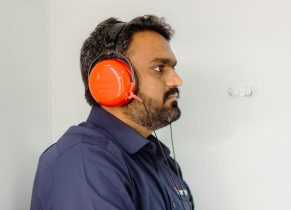

Driver worker performance with optimal posture
Our Happy Health consultants can work with individuals or worker groups to develop a process that can help them adapt their movements to any given situation to improve the safety and efficiency of the activity.


Benefits of ergonomics in the workplace
- Reduce work-related injuries and conditions
- Create a safer, more comfortable environment
- Increase ergonomic awareness with posture and workstation setup
- Improve task efficiency and productivity
- Lower future workers’ compensation claims
- Meet your legislative requirements
Common risk factors
- Repetitive movements – Typing on a keyboard, using a computer mouse, assembly line work
- Awkward postures – Bending or twisting to reach objects, sitting or standing for long periods
- Poor workstation design – Using a chair without proper support, working at a desk that’s too high or low
- Lack of training – Lack of awareness of ergonomic principles and not shown proper ergonomic techniques
Our 5 basic principles
We use five basic guidelines or ‘rules of engagement’ for working out successful ergonomic practices:

Optimal Chair and Posture Setup
Adjust chair for feet flat, knees/hips at 90-110°, lumbar support for spine curve, and neutral alignment (ears-shoulders-hops in line)
Screen and Input Device Positioning
Screen at eye level, arm’s length away, centred; keyboard/mouse for 90-110° elbows, straight wrists, close to body with relaced shoulders.
Workstation Adjustability and Reach
Use sit-stand desks, ensure legroom clearance, keep frequent items in 30cm zone, store heavy items at waist height to avoid overreaching.
Regular Movement and Micro-Breaks
Change posture every 30 minutes, stand, stretch, walk; limit continuous sitting to 1-2 hours; alternate tasks for circulation and variety.
Risk-Aware Workstation Design
Eliminate obstructions, promote dynamic sitting/standing, and tailor setup to individual needs to prevent MSDs from prolonged static postures.
Frequently asked questions
Here are some of the most common questions we get asked about our ergonomics.
What is ergonomics?
Ergonomics is the process of creating a safe, comfortable, and efficient working environment by adapting it to the person rather than forcing the person to do it. It includes choosing the right chairs that support the natural curve of the spine, creating workstations at the correct height to reduce strain, and optimising the layout of tools to minimise repetitive motions.
How do we know what type of ergonomics training we need?
To determine the type of ergonomics needed, you need to consider the physical demands of different job roles in your organisation and evaluate current work practices, tasks, and equipment used to identify risks and areas where improvements are needed. You also need to be aware of current legislation and standards to ensure you’re currently compliant. We can complete this complex, time-consuming process for you through Job Analysis.
How are ergonomics training delivered?
Ergonomics training can be delivered in a variety of ways. This includes posters, brochures, newsletters, videos, training sessions, active demonstrations on-site, safe working instructions and active safety controls.
Training is most effective when it is introduced and demonstrated across the entire business.
Is ergonomics training legally required?
Not explicitly mandated, but essential for WHS duty of care, Safe Work Australia recommends it to manage task risks, especially with prolonged sitting or repetitive strain.
Who needs ergonomics training?
Desk-based workers, hybrid/remote staff, and managers; particularly relevant during new office fitouts, hybrid transitions, or when discomfort reports increase.
How often should ergonomics training occur?
Onboarding, after fitouts/relocations, or when risks emerge; ongoing via toolbox talks and audits to sustain behavioural changes.